Altera Home Design Blog
The Sideboard Edit: 7 Pieces Leading the Room in 2026
The sideboard used to be an afterthought, somewhere to stash table linens and stray cables. This year it's doing more of the work a console or coffee table used to do, setting the tone for the whole room. Altera Home Design • August 2026 • 7 Min Read Natural Marble Sculptural Metal Fluted & Ribbed Wood Retro Two-Tone We pulled together seven sideboards from the current collection that make a case for going bigger and bolder in the dining room or entryway. Fluted wood, book-matched marble, sculptural steel panels. Here's what's worth a second look, and what each one is actually built from. In This Edit 1. Halliway Retro Sideboard 2. Ripple Sideboard 3. Ageo Sideboard 4. Isfjell Marble-Top Sideboard 5. Cubic Collision Modern Credenza 6. Art Deco Metallic Sideboard 7. Nero Marquina Marble Buffet 01 Halliway Retro Sideboard Two-tone furniture is back, and the Halliway is one of the better versions of it. A black upper section with vertical ribbing and brass hardware sits over walnut-grain drawers, the whole thing raised on tapered black legs. It reads more bedroom dresser than dining sideboard, which makes it a good option if you want the trend without committing the whole dining room to it. Price$1,495 Dimensions80cm (31.5") L x 40cm (15.75") W x 105cm (41.4") H MaterialWood, black and walnut finishes, brass hardware Shop the Halliway → 02 Ripple Sideboard Textured fronts are one of the more interesting shifts away from flat, matte surfaces, and the Ripple is a compact way to try it. Its ridged façade catches light differently throughout the day, which is a good trick for a smaller piece that needs to hold its own on a console table or narrow wall. Price$2,795 Dimensions100cm (39.4") W x 40cm (15.75") D x 50cm (19.75") H MaterialPremium wood with a rippled texture finish Shop the Ripple → 03 Ageo Sideboard Thick, rustic oak with the knots and grain left visible, set on two wide, blocky legs that give it a grounded, architectural stance. At 229cm wide, the Ageo is built for a real dining wall, and it comes with three built-in cable holes with swivel covers if you're using it behind a media setup rather than a dining table. Price$4,149 Dimensions229cm (90") W x 51cm (20") D x 81cm (32") H MaterialMDF with rustic oak veneer, oak veneer shelving Shop the Ageo → "A sideboard this size does more for a dining room than most of what's hanging on the walls." 04 Isfjell Marble-Top Sideboard Solid ash wrapped in soft vertical fluting, topped with a slab of natural marble. No two slabs are the same, so every Isfjell has its own veining. The pairing of warm wood and cool stone is what makes this one work; it reads collected rather than matched, which is why it fits both a dining room and a living space. Price$3,490 Dimensions153cm (60.25") W x 50cm (19.75") D x 85cm (33.5") H MaterialSolid ash wood, natural marble top Shop the Isfjell → 05 Cubic Collision Modern Credenza The most sculptural piece on this list. A wood veneer body is broken up by a multi-layered arrangement of brushed stainless steel panels in a warm metallic finish, so the front reads almost like wall art rather than storage. Soft-close hinges keep the doors quiet, which matters once you notice how much surface area is doing visual work here. Price$2,990 Dimensions200cm (78.75") W x 45cm (17.75") D x 85cm (33.5") H MaterialEngineered wood, wood veneer, brushed stainless steel panels Shop the Cubic Collision → 06 Art Deco Metallic Sideboard A metallic-painted cabinet with a repeated geometric door pattern, set on a corrosion-resistant stainless steel base, with a cantilevered top in imported Italian Monica Red marble. It's the most overtly Art Deco piece in the collection, and the marble top doing a cantilever rather than sitting flush is what keeps it from feeling like a costume piece. Price$3,990 Dimensions179.9cm (70.9") L x 43cm (16.9") D x 97.9cm (38.5") H MaterialEngineered wood, metallic paint, stainless steel base, Italian marble top Shop the Art Deco → 07 Nero Marquina Marble and Black Veneer Buffet The Splurge The piece we'd build a whole dining room around. A single slab of natural black marble with dramatic white veining sits on a textured black veneer body, the entire cabinet held up by a brushed stainless steel frame. At 240cm wide, it's a genuine centerpiece rather than a piece of storage furniture that happens to look nice. Price$4,490 Dimensions240cm (94.5") W x 55cm (21.6") D x 90cm (35.4") H MaterialNatural black marble top, black veneer over engineered wood, brushed stainless steel frame Shop the Nero Marquina → The Edit at a Glance Sideboard Price Width Best For Halliway $1,495 80cm Bedroom, retro two-tone look Ripple $2,795 100cm Compact accent, textured statement Ageo $4,149 229cm Media wall, rustic minimalism Isfjell $3,490 153cm Wood + marble, dining or living Cubic Collision $2,990 200cm Sculptural, entryway focal point Art Deco Metallic $3,990 179.9cm Art Deco lovers, marble accent Nero Marquina $4,490 240cm Statement dining room buffet See the full sideboard collection More sizes, finishes, and styles beyond this edit. Shop All Sideboards →
Learn moreInterior Design in Canada: The 2026 Style Guide
Style Guide, Interior Design, Canada, 2026, Colour Trends, Natural Materials, Home Decor, Lighting, Living Room
Learn moreHow to Furnish a Living Room: The Complete Canadian Buying Guide
Most living rooms are the accumulated result of separate decisions made at different times, from different references, under different constraints. Each individual choice was defensible. Together, they produce a room that functions but never settles. This guide covers the right sequence: sofa first, then rug, then coffee table, then accent seating, with specific picks from Altera's current collection at each step and the reasoning behind each recommendation.
Learn moreThe Best Beds and Bed Frames in Canada for 2026
Eight bed frames from Altera's current collection, reviewed by material, construction, and price: from a top-grain leather headboard with performance fabric sides to a three-configuration storage bed, a solid ash and Belgian linen statement frame, and an eco-leather platform at $1,295. Each pick is chosen for a different buyer. All ship free across Canada.
Learn moreHow to Choose the Right Coffee Table for Your Living Room
Buying Guide / Living Room How to Choose a Coffee Table That Works Size, shape, material, and styling. A practical guide to the piece of furniture your household touches every single day. Altera Home Design March 2026 12 Min Read The coffee table is the most-used piece in the living room. It holds your morning cup, your books, your remotes, your feet. People set things down on it without thinking. And yet most people choose one for how it looks in a photograph and discover too late that it is the wrong size, the wrong height, or the wrong material for how they actually live. The right coffee table does three things at once: it fits the proportions of your sofa, it handles the demands of your household, and it contributes to the room without dominating it. Too large and the room feels cramped. Too small and the table drifts uselessly in the middle of the space. Too delicate for a home with children and it becomes a source of daily anxiety rather than daily convenience. This guide covers every decision in sequence. By the end, you will know exactly what you need, and why. Step 01 Size: Get This Right Before Anything Else Before you think about style, think about centimetres. A coffee table that is the wrong size for your sofa will look wrong no matter how beautiful the piece is. Two measurements determine everything: length and height. Length: The Two-Thirds Rule Your coffee table should be roughly two-thirds the length of your sofa. For a 240 cm sofa, that means a table of about 150 to 160 cm. This proportion balances the sofa without competing with it. A table that matches the sofa's full length overwhelms the arrangement. One that is less than half the sofa's length looks borrowed from a different room. For sectional sofas and L-shaped arrangements, a square or round table often works better than a rectangular one, because the seating wraps around it from multiple sides. A nesting set like the Amsterdam Coffee and Side Tables is particularly effective here: the larger table centres the arrangement, and the smaller one pulls out beside the chaise when you need the extra surface. Height: Level With the Sofa Seat The top of your coffee table should sit at the same height as your sofa cushions, or within 5 cm. This is the ergonomic sweet spot: comfortable for reaching a drink, setting down a plate, or picking up a book. A table that sits too high feels like a barrier between you and the sofa. Too low and you are hunching forward every time you reach for something. Most coffee tables sit between 35 and 45 cm tall. If your sofa has deep, low-slung cushions (common in modern and Scandinavian designs), aim for the lower end of that range. If your sofa sits higher, as traditional and mid-century styles tend to, aim higher. Spacing Rule The 40 cm Gap Leave roughly 40 to 45 cm between the edge of your sofa and the edge of the coffee table. This is enough room to walk past and sit down without clipping your shins. In smaller condos where space is tight, 35 cm is the practical minimum. Any closer and the table becomes an obstacle rather than a convenience. Step 02 Shape: Follow the Layout of the Room The shape of your coffee table should respond to the geometry of your seating arrangement and the proportions of the room. This is spatial logic more than personal preference. Rectangular Tables The standard choice, and standard for good reason. Rectangular tables align naturally with three-seat sofas and two-plus-one arrangements. They deliver the most usable surface per square foot and work particularly well in longer, narrower living rooms common in Canadian townhouses and condos. The BT18 Rectangular Coffee Table with Glass Top is a clear example: its transparent surface keeps the room feeling open while providing generous area to work with. Round and Oval Tables Round tables suit homes with young children (no sharp corners) and work better than rectangular ones with curved sofas, sectionals, and circular seating arrangements. Every seat sits at roughly the same distance from the centre, which matters when four people are gathered around the table. An oval shape, like the Apollo Marble and Chrome Accent Table Set, gives you the visual softness of a circle with the practical surface area of a rectangle. BT18 Glass Top Rectangular · $1,490 Apollo Marble Oval Set · $1,190 Square Tables Square coffee tables suit square rooms and L-shaped sectionals where the sofa wraps the table on two or more sides. They create a centred, symmetrical focal point that suits rooms with a strong grid particularly well. Nesting Sets For living rooms that serve more than one purpose, nesting tables offer flexibility no other format matches. Pull the smaller piece out when you need the surface area; tuck it back when you need the floor. In Canadian condos under 800 square feet, where every piece of furniture has to earn its keep, this matters considerably. "The best coffee table is the one you stop noticing. It is always the right height, always within reach, and never in the way. That effortlessness is not accidental." Step 03 Material: Beauty, Durability, and Real Life Your coffee table's material determines how it ages, how you maintain it, and how it reads in the room. Lifestyle matters here as much as aesthetics. Marble and Natural Stone Marble is the statement choice. Nothing else matches its depth, veining, and sense of permanence. It is heavy, which makes it stable. The trade-off: marble is porous and can stain if coffee, wine, or citrus is left to sit on it. Most modern pieces come pre-sealed, which handles daily use well, but marble is not the right choice if you want a surface you never have to think about. For homes that want the look of marble with more practical performance, the BT51 Wavy Glass Coffee Table with Marble Base finds a good balance: the marble base carries the visual weight and sense of luxury, while the glass top handles daily contact without worry. BT51 Wavy Glass Coffee Table From $1,990 CAD Tempered wavy glass top on an artificial marble base. The glass surface handles daily contact; the marble base grounds the room. Available from 80 to 120 cm diameter. View Table Glass Glass coffee tables make small rooms feel larger because they let light and sightlines pass through. Tempered glass is more durable than most people expect: heat-resistant, and in the rare case of breakage, it fractures into small blunt pieces rather than sharp ones. The real trade-off is maintenance. Glass shows fingerprints and dust more readily than opaque surfaces, so it needs a wipe every few days to stay looking right. The BT45 Glass V-Leg Coffee Table Set is an excellent choice for smaller living rooms. Its transparency preserves the sense of space, and the steel V-legs add structure and modernity without visual weight. Wood Wood is warm, forgiving, and works with almost every interior style. Solid wood absorbs the marks of daily use and develops a patina over time. Many people find the lived-in finish more appealing than the original. For a sculptural option, the Trisect Architectural Coffee Table offers a geometric circular design in ash with wenge veneer that reads as furniture and art in equal measure. BT45 Glass V-Leg Set · $1,490 Trisect Architectural · $1,190 Metal and Mixed Materials Metal frames paired with glass, stone, or wood are the most adaptable category in modern furniture. The frame provides structure; the top surface sets the character of the piece. Warm gold and brass tones soften a cool room. Black and chrome cool down a warmer one. The Eclipse Gold and Black Layered Coffee Table shows this well: its layered metal and glass construction creates visual depth that makes the table read as a sculptural object, not just a flat surface. Eclipse Gold and Black Layered Coffee Table $1,290 CAD Layered metal and glass in gold and black. At 120 cm wide, it anchors a large sofa arrangement. The geometric structure keeps it from reading as a solid block. View Table Practical Note Choosing for Real Life If you have young children, avoid sharp-cornered stone and metal tables. Round edges and tempered glass are both safer. If you entertain often, choose a surface that handles wine and water without staining. If you are in a smaller space, glass or pale materials preserve the sense of openness. The most beautiful table in the world is the wrong table if it makes you anxious about every cup placed on it. Step 04 Storage: Hidden Capacity for Real Homes In theory, coffee tables hold nothing but a perfectly arranged vignette. In practice, they collect remotes, coasters, magazines, and the contents of pockets. If your living room lacks other storage, a coffee table with built-in drawers, a lower shelf, or interior compartments can be the difference between a tidy room and a chaotic one. The BT66 Coffee Table with Stone Veneer and Wood Drawers handles this well. From above, it reads as a clean, premium piece. From the side, the wood drawers conceal the everyday clutter. It does both jobs without looking like it was designed to compromise. BT66 Stone Veneer Coffee Table $1,790 CAD Stone veneer top with integrated wood drawers. Clean and premium from above. Practical storage from the side. Available from 105 to 120 cm in length. View Table Open shelves offer a middle path: a lower level provides a dedicated spot for books or trays while keeping the table's silhouette airy. Nesting tables offer a different kind of flexibility: the smaller piece serves as a side table when you need the surface and tucks away under the larger table when you need the floor. Step 05 Styling: The Rule of Layers A bare coffee table looks unlived in. An overloaded one looks chaotic. The goal is a layered arrangement that reads as considered but not precious: something you can move aside when you need the surface and reassemble in thirty seconds. The Stack Two or three books laid flat create a visual foundation. Choose books with interesting covers or spines. The stack should stay under 15 cm in height. Any taller and it blocks sightlines across the table. The Object One decorative piece on top of or beside the stack: a ceramic bowl, a small sculpture, a candle in a holder, a stone sphere. Choose something in a different material from the table surface. A matte ceramic bowl on a glossy marble table. A brass object on a wood surface. The contrast between materials is what makes the arrangement look deliberate rather than incidental. The Organic Element A small vase with a fresh stem or a few dried branches brings life to the arrangement and changes with the seasons. In Canadian homes where winters are long, this small piece of organic life on the coffee table provides a daily visual reset that a photograph or sculptural object cannot replicate. The Tray A tray corrals everything and creates a defined zone, which makes the table easy to clear when you need the full surface. It also stops the styled objects from migrating across the table over the course of a week. Choose a tray in a material that contrasts with the table surface: wood on marble, metal on wood. "Style a coffee table the way you dress for dinner with close friends. Thoughtful enough to look considered. Relaxed enough not to look like it took an hour." Step 06 Pairing With the Room: Sofa, Rug, and Lighting A coffee table does not exist in isolation. It sits at the intersection of the sofa, the rug, and the light, and it needs to work with all three. Table and Sofa Match visual weight. A heavy upholstered sectional wants a substantial table: marble, solid wood, or a large metal-and-glass piece. A slim mid-century sofa pairs better with something lighter, such as a glass top on fine legs or a simple wood surface. The Nero Modernist Geometric Coffee Table, in sintered stone and stainless steel, is substantial enough to anchor a large sectional without reading as a solid mass, because its geometric structure keeps it visually open. Table and Rug The front half of your coffee table should sit on the rug. A rug that is too small for the table creates a visual island that makes the room feel smaller than it is. If you are shopping for both at once, choose the rug first and size the table to fit within it. Altera's rug collection ranges from compact area rugs to room-defining pieces that comfortably accommodate both the sofa and the coffee table together. Table and Lighting A floor lamp placed behind the sofa casts light down onto the coffee table surface and makes the arrangement glow in the evening. This is one of the simplest ways to elevate a living room after dark. Place the lamp behind the sofa or in a corner. Directly beside the coffee table, it crowds the arrangement and creates shadows from the wrong angle. Nero Modernist Geometric · $1,290 Orion Interlocking Duo · $1,190 Step 07 The Decision in Order Choosing a coffee table is a sequence, not a single decision. Measure your sofa and calculate two-thirds of its length. That is your target table length. Measure your sofa seat height and match the table height to within 5 cm. Choose the shape based on your seating layout: rectangular for a standard sofa, round or square for a sectional. Choose the material based on your household: glass for smaller spaces, marble for a statement, wood for long-term durability, metal and glass for versatility. Decide whether you need storage. Then style it in layers. The coffee table is the piece you reach for every day. It holds your morning ritual and your evening wind-down. Choose one that serves your life as well as it serves the room, and you will stop thinking about replacing it. "A great coffee table is like a good host. It anticipates what you need, gives you space when you want it, and holds everything together without drawing attention to itself." Find Your Coffee Table Marble, glass, wood, and stone. Coffee tables and side tables for every living room, shipped free across Canada. Shop Coffee Tables
Learn moreThe Ultimate Home Office Setup Guide for Productivity and Comfort
The home office is no longer a makeshift corner with a laptop on the kitchen table. This guide covers everything you need to get it right: how to size and choose a desk, what actually makes a chair ergonomic, how to layer lighting for focus and video calls, and how to make a workspace feel good in any room — dedicated office, shared space, or living room corner.
Learn moreHow to Style a Small Entryway With a Shoe Cabinet and Smart Storage
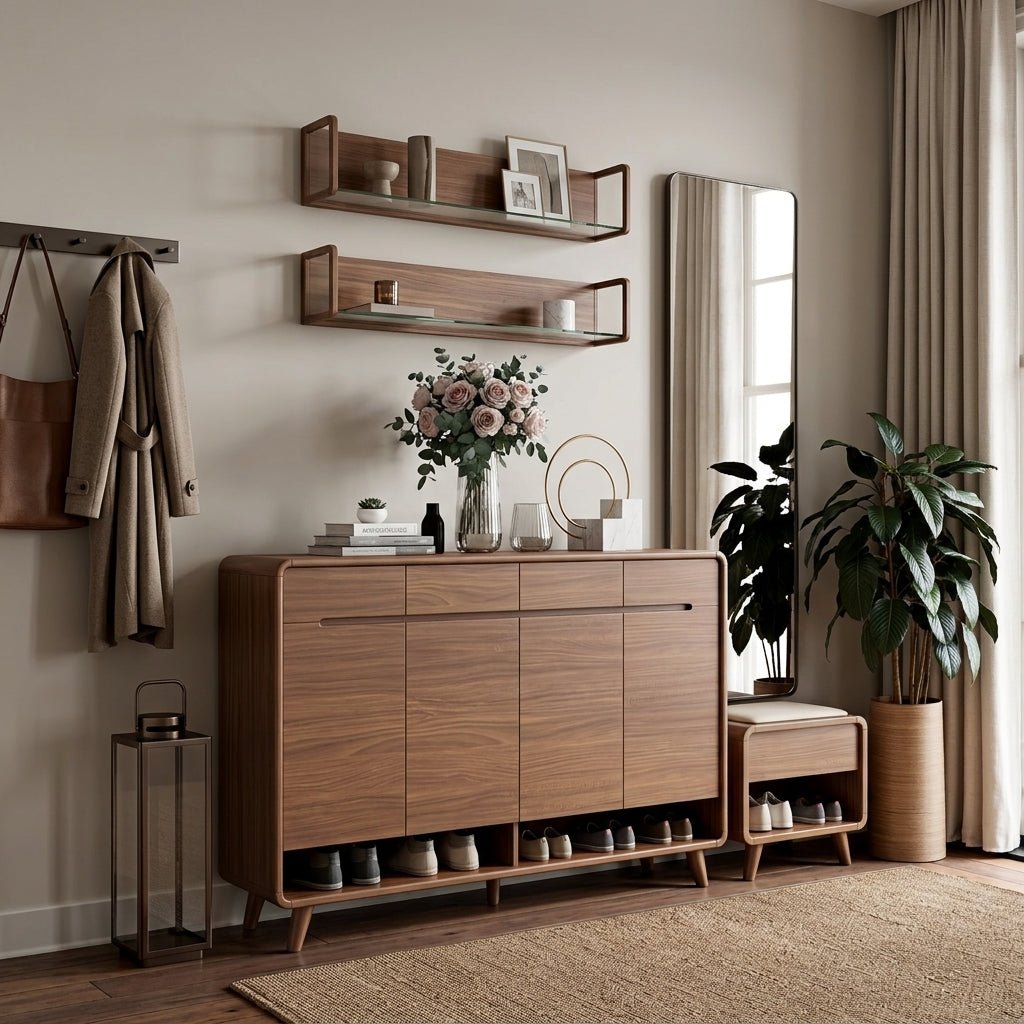
Styling Guide / Entryway How to Style a Small Entryway With Smart Storage Shoe storage, lighting, and first impressions. A practical guide to the most overlooked space in your home. Altera Home Design February 2026 11 Min Read The entryway is the first thing you see when you walk through the door and the last thing you see when you leave. It sets the tone for the entire home. Yet in most Canadian houses and condos, it is treated as an afterthought: a pile of shoes by the door, a row of hooks overloaded with coats, and a general sense of disorder that greets you every single day. The challenge is real. Canadian entryways must handle winter boots caked in salt and slush, multiple pairs of shoes per family member, jackets for every season, umbrellas, bags, keys, and dog leashes. All of this in a space that is typically three to six feet wide. The solution is not minimalism. It is smart furniture that conceals the mess while making the space look deliberately designed. This guide shows you how to turn even the smallest entryway into a functional, welcoming threshold. The key piece is a shoe cabinet. Everything else follows from there. SC54 Shoe Cabinet · $890 SC01 Shoe Cabinet · From $390 Step 01 Why a Shoe Cabinet Is the Best Entryway Investment Shoes are the biggest source of entryway clutter in Canada. Between winter boots, spring sneakers, summer sandals, and work shoes, a family of four can easily accumulate twenty or more pairs rotating through the front door. Without dedicated storage, they pile up on the floor, block the doorway, and make the space feel smaller than it is. A shoe cabinet solves this directly. Unlike an open shoe rack, which displays the clutter rather than hiding it, a closed cabinet with doors or drawers keeps everything out of sight. The best designs are slim enough for narrow hallways, often only 32 to 35 cm deep, because they use angled or tilt-out shelving that tilts shoes inward rather than laying them flat. The top surface of a shoe cabinet is also the most valuable horizontal surface in the entryway. It is where you drop your keys, stage a small arrangement, and create the visual focal point that turns a functional corridor into a designed space. Choosing the Right Size Start by counting the pairs of shoes that need daily or seasonal access. For a compact hallway, the SC54 Shoe Cabinet holds a generous amount in a 80 cm wide, 120 cm tall footprint with tilt-out drawers and a utility shelf. For larger families who need more capacity, the SC01 Shoe Cabinet offers modular sizing from 82 cm to 173 cm wide, with enclosed compartments and open lower shelves that handle multiple shoe types at once. Canadian Winter Tip Managing Wet Boots Wet winter boots should not go directly into a closed cabinet. The moisture causes odour and can damage the interior over time. Keep a boot tray near the door for drying, then move boots into the cabinet once they are dry. For daily rotation, a drip mat inside the lowest shelf handles light wet traffic. Most Altera cabinets have removable interior panels that make cleaning straightforward. SC54 Shoe Cabinet $890 CAD Natural wood brown finish with three tilt-out shoe drawers and one utility shelf. Measures 80 cm wide and 120 cm tall. Fits hallways that cannot accommodate a wider piece. View Cabinet Step 02 Material and Finish: Connecting the Entryway to the Rest of the Home The entryway is the transition point between the outside world and your interior design. The cabinet you choose here sets a visual expectation for the rooms beyond it. Its material and finish should echo the dominant tones of adjacent spaces, not necessarily match them exactly. Natural Wood If your home leans toward warm Scandinavian or mid-century modern design, a natural wood shoe cabinet creates a natural transition. The SC54 Shoe Cabinet has clean lines that feel modern without being cold, and its natural brown finish warms up even the most neutral hallway. For larger families or those who want modular sizing options, the SC01 Shoe Cabinet offers the same warmth in a walnut finish across five width configurations. SC54 Natural Wood · $890 SC01 Walnut Finish · From $390 White and Light Finishes In darker or narrower entryways, a white cabinet reflects light and makes the space feel larger. White is also the most versatile finish, working with every interior style from minimalist to coastal to traditional. The SC52 White Shoe Cabinet is well suited to condos and apartments where lightness and clean lines are the priority. Available in three widths from 80 to 120 cm. SC52 White Shoe Cabinet From $950 CAD White melamine finish with natural wood accents. Angled interior shelves keep shoes organised behind closed doors. Available in 80, 100, or 120 cm widths. View Cabinet Ceramic and Premium Surfaces For entryways that serve as a design statement, a ceramic-topped shoe cabinet combines durability with visual refinement. Ceramic resists scratches, stains, and moisture better than wood, a practical advantage in a space that endures daily contact with keys, bags, and wet items. The SC35 Ceramic Top Shoe Cabinet is 220 cm long and 40 cm tall, making it a low, horizontal piece that reads more like a console than a storage unit. SC35 Ceramic Top Shoe Cabinet From $960 CAD Scratch-resistant ceramic surface on an MDF wood body. At 220 cm long and 40 cm tall, it sits low like a console table, keeping the entryway feeling open rather than enclosed. View Cabinet "The entryway is a thirty-second experience. The time it takes to walk in, set down your things, and move into the home. In those thirty seconds, you either feel calm or you feel chaotic. The right furniture makes the difference." Step 03 Lighting: Small Space, Big Return Most entryways rely on a single overhead fixture, usually whatever the builder installed. This creates flat, even light that makes the space feel like a corridor rather than a room. One or two intentional lighting choices change that completely. A wall sconce at eye level is the most effective upgrade. It casts light upward and downward, creating depth on the walls without taking up floor space. If your ceiling is high enough, a small pendant provides a focal point that signals intention: this is a designed space, not an afterthought. A floor lamp positioned just inside the entryway, beside or just past the shoe cabinet, creates a pool of warm light that greets you when you open the door. This matters especially during Canadian winters, when you arrive home after dark for months at a stretch. The Helsinki Glow, at 148 cm tall with an omnidirectional diffused glow, is well suited to narrow hallways: its vertical silhouette takes up almost no floor footprint while casting warmth across the whole space. The Helsinki Glow $390 CAD A 148 cm floor lamp with a sinuous vertical silhouette and soft omnidirectional light. Slim enough for narrow hallways. Brushed aluminium and iron construction. View Light Step 04 Styling the Top Surface The top of your shoe cabinet is the visual centrepiece of the entryway. It is the first surface your eye lands on when you walk through the door. Keep it considered, not cluttered: one functional item, one decorative item, one organic element. The Functional Layer A ceramic tray or shallow dish for keys and loose change prevents the daily scatter and signals that this surface is maintained. Choose a tray that works with the cabinet finish: a brass tray on dark wood, a matte white dish on a white cabinet, a stone tray on a ceramic surface. The contrast between materials is what makes the arrangement look deliberate. The Decorative Layer A framed print leaned against the wall (rather than hung, because leaning looks considered rather than permanent), a sculptural object, or a small stack of books creates visual interest at the moment of entry. Keep the scale proportionate to the cabinet. Oversized art in a narrow hallway reads as crowded, not bold. The Organic Layer A single stem in a bud vase, a small potted plant, or a branch of dried eucalyptus brings the arrangement to life. This is the element that changes with the seasons, and it does more work than its size suggests. In Canadian homes where winters are long and grey, a piece of greenery in the entryway provides a small but genuine lift every time you walk through the door. Choose something low-maintenance: pothos and snake plants both survive in the low-light conditions most hallways provide. Styling Rule The Edit Test Once you have styled the top of your cabinet, remove one item. If the arrangement still looks right, the edit was correct. If it feels empty, add it back. The goal is intention, not decoration. Everything on the surface should earn its place, not just occupy it. Step 05 Making the Most of a Narrow Hallway Canadian condos and townhouses often have entryways barely four feet wide. In these spaces, every centimetre matters. The most effective strategy is simple: keep one wall clear for walking and use the opposite wall for all your storage and styling. The Single-Wall Strategy Place your shoe cabinet against the longest uninterrupted wall. Above it, install a row of hooks or a wall-mounted coat rack. This keeps jackets off the floor without requiring a closet. Above the hooks, a mirror visually doubles the width of the hallway and gives you a last-look check before you leave. The mirror is one of the highest-impact, lowest-cost upgrades in the entryway. The Rug A runner rug along the hallway defines the entryway as its own zone, absorbs sound, and protects the flooring from boot traffic. Choose a low-pile rug that lies completely flat. A runner that bunches under the door is a daily annoyance and a genuine tripping hazard. Vertical Storage When floor space is genuinely tight, go vertical. A tall, slim shoe cabinet maximises capacity within a narrow footprint while giving the wall visual weight. The SC03 Ash Wood Shoe Cabinet does this well: at 100 cm tall with solid wood doors and a fluted glass panel, it functions as both storage and a piece of furniture worth looking at. SC03 Ash Wood Shoe Cabinet $1,540 CAD Ash wood in walnut finish with solid wood doors and a fluted glass panel. 120 cm wide, 100 cm tall. Statement storage for entryways that can accommodate a taller piece. View Cabinet Step 06 The Entryway in Order Styling an entryway is a sequence, not a single purchase. Start with the shoe cabinet: choose a width that fits your hallway and a finish that connects to the adjacent rooms. Add a light source beside or just past the cabinet to create warmth the moment the door opens. Style the top surface with three items: something functional, something decorative, something alive. Install hooks or a wall-mounted rack above the cabinet for coats and bags. Add a mirror to expand the visual space and give the hallway a focal point. Finish with a flat-weave runner rug to define the zone and protect the floor. Each layer builds on the last. The cabinet anchors the space. The light warms it. The styling makes it personal. The mirror and rug complete it. Done right, the entryway takes thirty seconds to pass through and leaves an impression that lasts. "A well-designed entryway does not announce itself. It simply makes you feel, the moment you step through the door, that someone thought about this. That this is a home." Style Your Entryway Shoe cabinets, lighting, and accessories for every hallway size, shipped free across Canada. Shop Shoe Cabinets
Learn moreHow to Design a Bedroom That Helps You Sleep Better
You spend roughly a third of your life in your bedroom — yet most Canadians treat it as an afterthought. This guide covers the five pillars of sleep-friendly bedroom design: layout, colour, lighting, furniture, and storage. With curated picks from Altera's newest collection of crafted beds, storage beds, and statement chests.
Learn more7 Stunning Living Room With Round Rug Ideas for 2026
Rugs & Styling / 2026 7 Stunning Living Room With Round Rug Ideas for 2026 Most rug problems are actually shape problems. Here's how one circle fixes them. Altera Home Design February 2026 12 Min Read Most living rooms have a rug problem. Not because the rug is ugly — often it's perfectly fine — but because it's the wrong shape. Rectangular rugs are so common that we rarely stop to question them. And so living rooms end up as rectangles containing rectangles containing more rectangles: sofa, coffee table, side tables, rug, all corners and parallel lines. The room works. It just never quite feels right. A round rug fixes this faster than almost anything else you can change. There are no corners to align, no edges that need to sit perfectly flush with the sofa. The circle draws the furniture toward it, creates a natural centre, and — more than any other single purchase — makes a room feel considered rather than assembled. Below, seven specific ways to use one well, plus honest guidance on sizing and materials before you buy. The Case For Curves Why Round Rugs Are Defining Living Rooms in 2026 Interior design has been pushing toward softer geometry for a few years now — rounded sofa arms, kidney-shaped coffee tables, arched doorways, chairs that look like they were designed to be used rather than admired. Round rugs are the natural floor-level counterpart to all of it. But even in rooms still full of straight lines, a round rug earns its place by doing something a rectangle simply can't: it interrupts the grid. There's a reason people have gathered in circles for thousands of years. Around fires, at tables, in conversation. A circular arrangement puts everyone at equal distance from the centre, which means no one is definitively "at the end" of anything. Research into the psychology of shape consistently shows that rooms with curved forms feel more welcoming and less tense than those dominated by right angles — which is perhaps why so many sterile, rigidly minimal spaces feel cold despite being expensive. A round rug is the gentlest possible intervention against that. For 2026 specifically, the trend forecasters are pointing toward earthy palettes, artisanal construction, and organic forms — warm greens, terracotta, sandy neutrals, wool and bamboo silk. Round rugs sit at the intersection of all three directions at once. The question is no longer whether one could work in your home. It's which one, and where to put it. A round rug doesn't just fill a floor — it organises the room around a single centre. Suddenly every seat feels like it belongs there, not just the one in front of the TV. Seven Ideas 7 Stunning Living Room With Round Rug Ideas 1Layered Textures for a Cozy Retreat The layered rug look has matured considerably since its Instagram peak. What works now is more deliberate — not stacking rugs on top of each other for the sake of it, but combining materials and scales to create something genuinely tactile. A plush round rug as the anchor, a flat-woven runner or sheepskin accent nearby, a woven throw across the arm of the chair whose front legs sit on the rug. Each piece does one job. New Zealand wool is the ideal foundation for this approach. The pile is springy rather than flat, it wears well in high-traffic areas, and the natural fibres create a warmth underfoot that synthetic materials never quite match. Layer with linen, jute, or a sheepskin accent to add contrast without adding colour — keep the palette to two or three tones and let the textures do the work. The result is a room that looks rich without looking busy, a distinction that separates good layering from textural maximalism that tips into clutter. Wabi-Sabi Natural Tone Circular Wool Carpet From $990 CAD New Zealand wool in soft grey. The gently irregular pile height mimics natural stone textures — a layering foundation that works under throws, beside sheepskins, and alongside anything woven. Available in 150 cm, 200 cm, and 250 cm. View Rug Layering Rule Three Textures. That's It. Round rug, sheepskin or flat-woven accent, woven throw on the sofa — three distinct textures create richness. Four or more competing materials and the room starts to look like a stack of unsold inventory. Let each layer do one job: the rug grounds, the accent defines, the throw says sit down and stay a while. 2Bold Patterns as the Starting Point A patterned round rug is one of the few genuinely low-commitment ways to make a bold design move. The sofa will be there for a decade. The rug can change. So if you've ever wanted to introduce real colour or pattern but couldn't commit to an accent wall, this is where to start. The principle is simple: one statement per room. If the rug is doing the talking, everything else should be listening. Pair a strongly patterned round rug with a sofa in a solid, neutral tone — grey, cream, warm white, or charcoal — and resist the temptation to add cushions with competing patterns. Simple textiles, clear surfaces, and metallic or glass accents that reflect the rug's colours rather than introducing new ones. The rug becomes the focal point, and everything else supports it without arguing. Eclipse Hand-Woven Tencel Rug From $2,990 CAD Hand-woven Tencel in grey, beige, and cream with an organic eclipse gradient. The pattern reads as abstract from a distance, detailed up close — the kind of rug that rewards sitting on the floor. Customisable sizing available. View Rug 3Monochrome for Rooms That Need to Breathe Not every room needs a statement. Some rooms need to stop trying so hard — and a single-colour round rug in cream, warm grey, or soft charcoal is one of the most effective ways to achieve that. The absence of bold colour lets the architecture breathe, the furniture speak for itself, and the light do what light does best in a room that isn't fighting it. Material is what separates a monochrome rug that looks expensive from one that looks flat. Bamboo silk catches light differently at every angle — there's movement in a plain cream rug that a synthetic weave simply doesn't have. Place it under a glass coffee table beside a white or stone-coloured sofa, add a single warm wood accent (a side table, a floor lamp), and one plant. That's the whole room. It works because nothing competes. For condos and compact apartments, this approach is particularly effective — it opens the space rather than filling it up. Serene Circle Bamboo Silk Area Rug From $890 CAD Beige bamboo fibre with a subtle tonal gradient. The silk-like sheen shifts with natural light — the closest thing to a rug that looks different in the morning than it does in the evening. Available in 150 cm, 200 cm, and 250 cm. View Rug 4Nature-Inspired and Grounded Biophilic design — building interiors that reference the natural world — has long since stopped being a trend and started being a baseline expectation in well-considered homes. The reasoning is straightforward: we spend the majority of our lives indoors, and our nervous systems weren't designed for that. Rugs made from natural fibres, in earth tones, with tactile surfaces that recall bark, stone, or moss — these are small gestures toward something our bodies actually respond to. A round rug in brown or warm-toned Tencel, placed under a cluster of houseplants, creates a kind of indoor clearing. Pair it with rattan, a linen throw, unglazed ceramic — materials that are imperfect by nature and better for it. The biophilic design movement is particularly well expressed through flooring, because the floor is what grounds you in a room. Literally. A round rug in a natural fibre is the simplest possible version of that idea. Japandi Style Handcrafted Round Rug From $1,890 CAD Brown Tencel with handcrafted construction and organic tonal variation. The warm pile pairs naturally with wood furniture, houseplants, and unglazed ceramics — a rug that looks like it belongs outdoors and improves any room that brings it in. View Rug Circular shapes have been drawing people together for thousands of years. There's nothing complicated about why a round rug makes a room feel more human — it just does. 5Zoning Open-Concept Spaces Without Walls Open-plan living is great in theory. In practice, it's difficult to furnish. Without walls to define where one room ends and another begins, everything bleeds together — the seating area merges with the dining table, the dining table with the kitchen, and none of it feels like a distinct place. Partitions and furniture walls can fix this, but they also close the space back down. A large round rug is a more elegant solution. Place it to anchor your seating area, arrange the sofa and chairs loosely around it, and the rug's perimeter becomes an implied boundary — clear enough to read as a zone, open enough to maintain the airiness of the floor plan. The key is scale: err on the side of larger. A rug that stops before the furniture legs lands in an awkward no-man's-land. The front legs of every seat should be on the rug, and there should still be a few inches of rug visible beyond them. That's what makes the zone feel intentional. Zoning Trick Different Shapes for Different Zones Round rug for the living area, rectangular rug under the dining table. The shape contrast does the zoning work — each area reads as distinct without any furniture rearrangement. Altera's full rug collection includes coordinating tones across both shapes if you're working to tie the two zones together. 6Warm Retro Character in a Modern Room The 1970s were genuinely good at one thing in interior design: warmth. The shaggy rugs, the earthy palettes, the textural richness that made rooms feel inhabited. What's changed is that you can now have all of that without committing to the avocado bathroom suite. A modern round rug with genuine texture and warmth — warm browns, soft oranges, muted golds — brings the best of the retro playbook into a contemporary room without making it feel like a period piece. The approach is contrast. Pair a warm, textured round rug with something sleek: a leather sofa, polished concrete, a pared-back contemporary light fixture. The rug handles the warmth and character; everything else stays clean and modern. The round shape softens the retro quality just enough to keep it grounded in the present. The result is a room that's comfortable to be in, not just to look at. The Modern Ripple Carpet — a textured beige diatom silk that channels warmth and depth in contemporary spaces / Altera Home Design 7Colour for Rooms That Are Actually Lived In Not every living room needs to be calm. Some rooms are loud, busy, full of children and pets and the productive chaos of a real household — and those rooms deserve rugs that meet them where they are. A round rug in sage, teal, coral, or mustard adds genuine energy to a space without requiring you to repaint or reupholster anything. There's also a practical argument for colour and pattern in a family home: they hide wear. A multicolour rug with an abstract pattern breaks up any visible marks before they become obvious. Variation is camouflage. Choose durable materials — diatom silk is waterproof, milk silk is soft but resilient — and pair the bold rug with neutral walls and furniture. Bright rug, quiet everything else. Let it take centre stage and leave it there. Sage River Flow Plush Area Carpet From $1,390 CAD Milk silk in flowing shades of green, cream, and sage. The abstract pattern hides daily wear without sacrificing any of the colour — ideal for busy living rooms, family spaces, and anywhere that's supposed to look lived in because it is. View Rug Before You Buy How to Choose the Right Round Rug for Your Living Room The most common rug mistake isn't choosing the wrong colour or pattern — it's choosing the wrong size. A rug that's too small looks like it drifted in from another room. Get the size right first, then everything else falls into place. Sizing It Correctly Measure your seating area before you do anything else. The front legs of your sofa and chairs should rest on the rug — this is what creates the unified, anchored look. A rug that stops just short of the furniture floats. One that extends 20–30 cm beyond the front legs grounds everything properly. Use this as a starting point: 150 cm Small Rooms Up to 10' × 10'. Works well in condos and studios — anchors a compact seating arrangement without crowding the room. 200 cm Medium Rooms 12' × 14'. The right size for most Canadian living rooms — comfortably seats a three-seater sofa and two chairs with room to spare. 250 cm+ Large Rooms 14' × 16' or larger. Makes a confident statement in open-concept spaces and generously proportioned rooms. Go big or the space swallows it. Material Comparison The fibre is what determines how a rug feels underfoot, how it ages, how much attention it needs, and whether it's still with you in fifteen years. Here's an honest breakdown of what you'll find in Altera's round rug collection: Property New Zealand Wool Bamboo Silk Tencel Milk Silk Feel Plush, springy Silky, light sheen Smooth, gentle Soft, dense Durability Very high Moderate High High Stain resistance Naturally resistant Low — handle with care High — moisture-wicking Moderate Sustainability Renewable, biodegradable Plant-based, low-impact Plant-based, low-impact Synthetic — easy-care Best for High-traffic, long-term use Low-traffic, minimal rooms Eco-conscious homes Family rooms, playful spaces Price range (CAD) $990 – $2,750 $890 – $2,990 $1,890 – $4,590 $1,190 – $1,490 Pairing With Furniture The rug and the furniture need to have a conversation, not a competition. Bold rug, neutral sofa. Monochrome rug, interesting chair. As a general rule: pick one thing to be the most interesting object in the room and design everything else around it. Browse Altera's sofa collection, living room chairs, and coffee tables alongside the rugs — seeing them together makes the decision much clearer than choosing each one in isolation. Which Round Rug Is Right for You? Answer one question and we'll point you straight to the right starting point. What best describes your living room? Compact Condo / Studio Minimalist & Serene Nature-Inspired & Warm Busy Family Home Your Match: Serene Circle Bamboo Silk, 150 cm A compact rug with a silk-like sheen that makes small spaces feel larger. The beige tone works with any colour scheme and the 150 cm diameter is sized exactly right for condo seating areas. Shop the Serene Circle → Your Match: Wabi-Sabi Circular Wool, 250 cm New Zealand wool in soft grey — the textural depth adds substance without disturbing a minimal palette. The 250 cm diameter creates a gallery-like anchor that makes the whole room feel resolved. Shop the Wabi-Sabi → Your Match: Japandi Handcrafted Round Rug Brown Tencel with organic tonal variation and handcrafted construction. Pairs with houseplants, rattan, and warm wood furniture as if it was designed for exactly that combination. Shop the Japandi Round → Your Match: Sage River Flow Plush Carpet The multicolour milk silk pattern hides daily wear while the sage and green tones keep the room feeling fresh. Durable, playful, and easy to maintain — it was made for rooms that get used. Shop the Sage River Flow → Care & Maintenance Keeping Your Round Rug Looking Good A quality round rug should last a decade or more. The maintenance is straightforward — it mostly comes down to not neglecting the basics. Placement first: centre the seating area around the rug so no single section bears disproportionate traffic. A rug pad underneath is worth buying — it prevents slipping, protects hardwood floors, and adds a small amount of extra cushion underfoot that makes a real difference over time. Vacuum regularly on a gentle suction setting. Avoid beater bars on hand-woven rugs; they pull fibres over time. For spills, blot immediately with a clean cloth — rubbing spreads the stain and damages the pile. Blot, don't rub. Use a mild cleaner appropriate for the specific fibre if needed, and check the manufacturer's instructions before applying anything. Rotate 90 degrees every two to three months. It takes thirty seconds and it's the single most effective way to distribute wear evenly, especially in front of high-use spots like the sofa. If edges start to curl on a new rug — common and temporary — weigh them down briefly with furniture legs or use double-sided rug tape until the rug settles flat. Consider swapping rugs seasonally if you have the storage: a lighter bamboo silk in summer, a plush wool in the colder months. For anything beyond routine care, the Altera FAQ page covers material-specific guidance. Quick Reference Featured Rugs at a Glance All five round rugs featured in this guide, side by side. Rug Material Sizes (cm) Best For From (CAD) Serene Circle Bamboo silk 150 / 200 / 250 Minimalist, monochrome, condos $890 Wabi-Sabi Circular NZ wool 150 / 200 / 250 Layered textures, high traffic $990 Sage River Flow Milk silk 200 / 290 Family rooms, playful colour $1,390 Japandi Round Tencel 150 / 200 / 250 Nature-inspired, biophilic spaces $1,890 Eclipse Hand-Woven Tencel Customisable Bold statement, eclectic rooms $2,990 Every rug ships free across Canada. No showroom markups, no middlemen. Browse the full Altera rug collection for additional shapes, sizes, and materials. FAQ Questions About Living Room Round Rugs What size round rug do I actually need? Measure your seating footprint, then choose a rug large enough that the front legs of your sofa and chairs sit on it. For a small condo (up to 10' × 10'), 150 cm is the right call. For a standard Canadian living room, 200 cm is the sweet spot. For larger or open-concept spaces, 250 cm or above gives you the anchor you need — anything smaller and the rug will look like it's trying to hide. Does a round rug work under a rectangular sofa? It works extremely well. The contrast between the circular rug and the straight lines of a rectangular sofa is precisely what makes the combination interesting. Position the rug so the front legs of the sofa are on it, the coffee table sits in the centre, and the circle extends past the chairs on either side. The shape does the softening for you. How do I keep a round rug clean? Vacuum on a gentle setting, blot spills immediately rather than rubbing them, and rotate 90 degrees every couple of months. Those three habits cover the vast majority of rug maintenance. For material-specific guidance — diatom silk, Tencel, and wool all have slightly different care needs — see the product pages or the Altera FAQ. Are round rugs a good fit for small living rooms? Better than a rectangle, often. A round rug has no corners to align and takes up less visual space than a rectangular rug with equivalent coverage. In tight rooms it softens the layout rather than boxing it in further. In open-concept condos, a 150 cm round rug under a coffee table is enough to define a proper conversation zone — without adding any visual clutter. Find Your Round Rug Round, rectangular, and custom sizes — all with free delivery across Canada and no showroom markups. Shop All Rugs
Learn more